


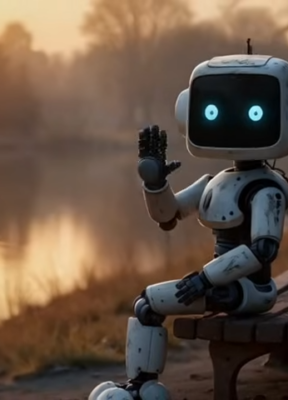



AI: From Ancient Myths to Modern Marvels
The origins of artificial intelligence (AI) trace back to the human desire to replicate intelligence and automate reasoning processes. Though AI as a formal discipline only emerged in the 20th century, its conceptual foundations stretch back thousands of years through philosophy, mythology, and early attempts at mechanical computation.
The ancient world laid the philosophical groundwork for AI. Greek philosophers such as Aristotle developed formal logic, which established principles for deductive reasoning—crucial for AI algorithms. Myths like Pygmalion’s statue and Hephaestus’s mechanical servants reflect early imaginings of intelligent, human-like creations. These stories, though fictional, foreshadowed later efforts to construct machines with cognitive abilities.
Significant progress began in the 17th and 18th centuries with the development of mechanical automata. Inventors like Blaise Pascal and Gottfried Wilhelm Leibniz created early calculating machines. Leibniz also proposed a “universal characteristic,” a symbolic language for representing knowledge—an idea central to modern AI’s formal logic and symbolic reasoning.
The 20th century marked a turning point with the advent of digital computers. Alan Turing, a British mathematician, laid the theoretical foundation for AI in the 1930s and 1940s. His concept of the Turing Machine described a general-purpose computational model capable of performing any algorithmic task. In 1950, Turing proposed the famous “Turing Test” to evaluate whether a machine could exhibit behavior indistinguishable from a human—a question still central to AI today.
AI was formally established as a field in 1956 at the Dartmouth Conference, organized by John McCarthy, Marvin Minsky, Nathaniel Rochester, and Claude Shannon. McCarthy, who coined the term “artificial intelligence,” envisioned machines that could simulate every aspect of learning or intelligence. Early AI research was optimistic, leading to programs that could play chess, solve algebra problems, and prove theorems. However, these systems were limited by weak computing power and an inability to generalize knowledge.
By the 1970s, AI faced its first major setback, known as the “AI winter,” as early promises failed to materialize into practical applications. Funding and interest waned. Nevertheless, the field revived in the 1980s with the development of expert systems—AI programs that emulated human decision-making in narrow domains. Though useful, these systems were brittle and required laborious rule programming.
The emergence of machine learning in the 1990s and 2000s shifted AI away from hand-coded rules toward data-driven models. Techniques like neural networks, previously sidelined due to lack of computing power, regained prominence. Landmark events—such as IBM’s Deep Blue defeating world chess champion Garry Kasparov in 1997—demonstrated AI’s growing capabilities.
In recent years, AI has flourished thanks to big data, cloud computing, and advanced algorithms. Deep learning, a subset of machine learning inspired by the brain’s structure, has led to breakthroughs in image recognition, natural language processing, and generative AI. Today, AI influences nearly every aspect of life—from voice assistants to medical diagnostics.
In conclusion, the origins of AI lie in a rich blend of philosophy, mathematics, and computer science. Though it has evolved through periods of hype and disappointment, AI continues to progress toward realizing the age-old dream of creating machines that think and learn.














There are no reviews yet.