


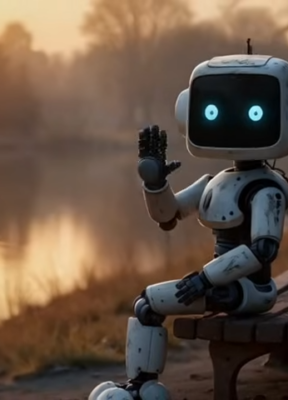



AI for Good: Transforming Our World
Artificial Intelligence has rapidly become one of the most transformative forces of the 21st century, redefining industries, economies, and societies. While much of the public discourse often focuses on the risks associated with AI, such as job displacement, surveillance, and ethical concerns, it is equally important to recognize how AI can be a force for good. When guided by human values and aligned with ethical principles, AI has the potential to solve some of humanity’s most pressing challenges. This essay explores five of the most impactful and inspiring uses of AI for social good: healthcare advancement, climate change mitigation, disaster response, education accessibility, and promoting inclusivity for people with disabilities.
1. Healthcare Advancement
One of the most profound impacts of AI has been in the field of healthcare. From early disease detection to personalized treatment plans, AI is revolutionizing the way medicine is practiced and delivered. Algorithms trained on massive datasets can identify patterns that are difficult, if not impossible, for human doctors to detect.
For example, AI systems have demonstrated the ability to detect cancers, such as breast, skin, and lung cancer at earlier stages with higher accuracy than traditional methods. Google’s DeepMind developed an AI model that outperformed radiologists in breast cancer detection. Similarly, AI tools are being used to diagnose diabetic retinopathy, a leading cause of blindness, in remote areas where access to specialists is limited.
Beyond diagnostics, AI supports drug discovery by predicting how compounds will interact with biological targets. This accelerates the development of new medications, as seen in recent efforts to find treatments for COVID-19. Additionally, AI-powered wearable devices can continuously monitor vital signs, alerting patients and doctors about potential health issues before they become emergencies.
In resource-limited settings, AI offers scalable and cost-effective solutions to healthcare access. Chatbots and telemedicine platforms powered by natural language processing (NLP) can provide medical advice and mental health support, breaking down geographical and economic barriers to care.
2. Climate Change Mitigation
As the climate crisis intensifies, AI is playing a vital role in helping scientists, policymakers, and communities respond more effectively. AI can process vast amounts of environmental data, from satellite imagery to sensor readings—to model climate trends and predict environmental changes with remarkable accuracy.
One powerful application is in optimizing renewable energy. AI systems help forecast wind and solar energy production, enabling better integration of renewables into the power grid. Companies like Google DeepMind have used AI to improve the efficiency of data centers, reducing energy consumption by as much as 40%.
AI is also used in climate modeling and disaster prediction. Machine learning models can simulate climate scenarios and assess the impact of human activity on global warming. These insights are crucial for formulating climate policy, guiding sustainable agriculture, and planning urban development to reduce environmental impact.
In conservation efforts, AI supports wildlife monitoring by analyzing images from camera traps, identifying endangered species, and detecting poaching activities. Organizations such as Conservation Metrics and Wildbook use AI to track animal populations, enabling more effective biodiversity protection strategies.
3. Disaster Response and Humanitarian Aid
In times of natural disasters and humanitarian crises, timely information and response can save lives. AI technologies enhance emergency response systems through improved forecasting, rapid damage assessment, and efficient resource allocation.
AI-driven predictive models help forecast the likelihood and impact of natural disasters such as hurricanes, floods, and earthquakes. For instance, IBM’s Watson has been used to analyze weather data to improve storm forecasts, enabling communities to prepare and evacuate in time.
After a disaster occurs, AI can assess the extent of damage by analyzing satellite imagery and social media posts, helping aid organizations prioritize areas most in need. During the 2015 Nepal earthquake, machine learning tools helped map affected regions by scanning online messages and photos, which accelerated the delivery of aid.
In refugee crises, AI supports humanitarian efforts by managing logistics, identifying vulnerable populations, and improving supply chain efficiency. AI chatbots can provide refugees with crucial information in their own language, helping them navigate legal systems or access essential services.
4. Education Accessibility
Education is a powerful equalizer, and AI is making learning more accessible, personalized, and inclusive than ever before. AI-powered tools are transforming classrooms and extending educational opportunities to remote and underserved populations.
One of the key benefits of AI in education is personalization. Intelligent tutoring systems can adapt to individual learning styles and paces, offering customized feedback and practice exercises. Platforms like Khan Academy and Duolingo use AI algorithms to tailor content to the learner’s level, helping students progress more effectively.
For students with disabilities, AI provides innovative solutions to overcome barriers. Speech-to-text and text-to-speech technologies assist students with visual or hearing impairments. AI can also convert written content into braille or provide real-time sign language interpretation through computer vision.
In remote areas, AI supports virtual classrooms and language translation tools, breaking down geographical and linguistic barriers. During the COVID-19 pandemic, AI-powered edtech platforms played a critical role in ensuring the continuity of education for millions of students worldwide.
Furthermore, AI can help identify students at risk of dropping out or falling behind by analyzing engagement patterns and performance data, enabling timely interventions by educators.
5. Promoting Inclusivity and Empowering People with Disabilities
AI is also being used to promote inclusivity by creating tools that empower people with disabilities to live more independently and participate fully in society. These technologies enhance mobility, communication, and daily living.
For example, AI-driven prosthetics and exoskeletons assist individuals with physical impairments, restoring mobility and improving quality of life. Companies like Open Bionics develop affordable bionic limbs using AI to interpret muscle signals for natural movement.
AI-powered speech recognition and NLP tools help people with speech disorders communicate more effectively. Apps like Voiceitt use machine learning to interpret non-standard speech, translating it into clear text or voice output.
Computer vision applications such as Microsoft’s Seeing AI app describe the environment to visually impaired users, identifying objects, reading text aloud, and recognizing people’s faces and emotions. These tools increase autonomy and enhance user confidence.
In the workplace, AI tools support inclusive hiring by removing bias in resume screening and enabling accommodations for neurodivergent individuals. AI systems can also aid in designing accessible websites and applications, ensuring compliance with universal design standards.
Conclusion
Artificial Intelligence, when aligned with ethical values and human-centered design, holds immense potential to address global challenges and uplift marginalized communities. From advancing healthcare and combating climate change to aiding in disaster relief, enhancing education, and promoting inclusivity, AI has demonstrated its capacity to be a force for good. As we move into an increasingly AI-driven world, it is essential to ensure that these technologies are developed responsibly, equitably, and transparently, so that the benefits of AI are shared by all.
By embracing the positive potential of AI and steering it toward societal good, we can build a future where technology uplifts humanity rather than divides it, a future where intelligence, both artificial and human, works in harmony for the betterment of the world.













There are no reviews yet.